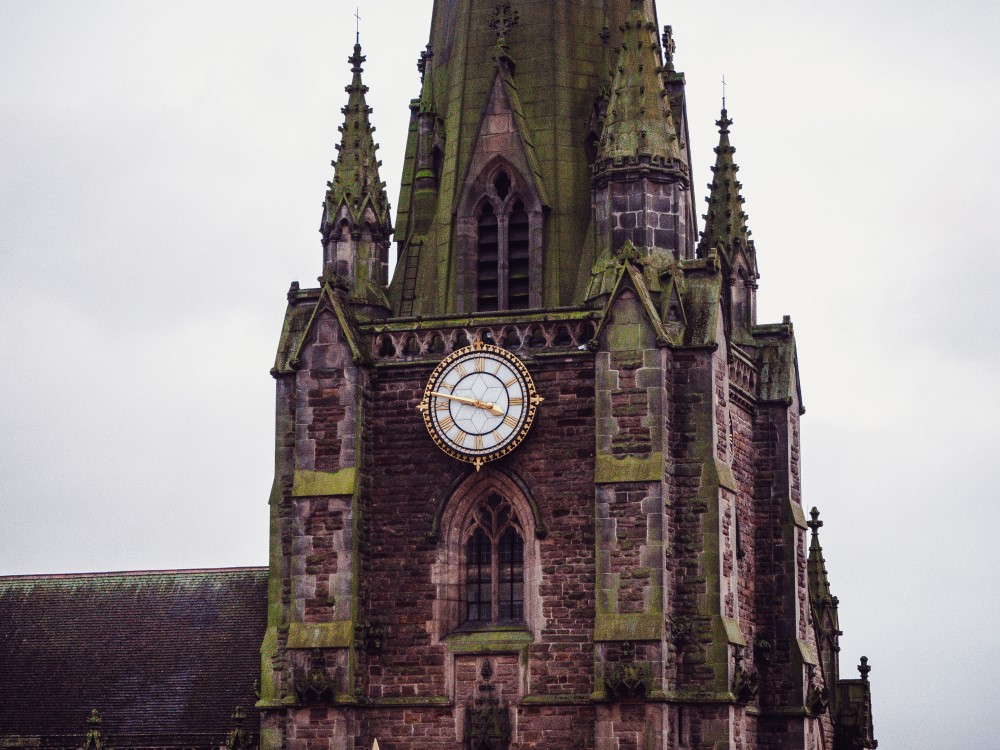
Credits to Regina Pivetta
Birmingham, Alabama has a long and complex history with The New South. The city was founded in 1871 as a planned industrial center where several major railroads converged, providing easy transportation for goods and raw materials. Initially, Birmingham was known as a center of iron production, and by the early 1900s, it had become one of the most important manufacturing cities in the region.
The period following the Civil War was a time of great change in the American South, as the region confronted the challenges of reconstruction and sought to rebuild its economy in the wake of the devastating conflict. This period is often referred to as The New South, and it was characterized by efforts to modernize and industrialize the region in hopes of competing with the North and West. This push for economic development was reflected in Birmingham’s founding, and it continued to shape the city’s history in significant ways over the next several decades.
In many respects, Birmingham embodied the vision of The New South that emerged during this time period. As historian Gavin Wright notes in his book “Old South, New South,” southern leaders believed that industrialization was key to revitalizing their region’s economy and breaking free from its traditional dependence on agriculture. This new economic model required investments in infrastructure such as railroads and factories, as well as changes to labor practices that emphasized efficiency and productivity.
Birmingham was perfectly situated for this type of development. The city’s founders deliberately chose its location because it was rich in iron ore, coal, and other raw materials needed for industrial production. Furthermore, its position at the center of several major rail lines made it an ideal hub for transportation and distribution.
Birmingham’s iron and steel industry grew rapidly in the late 19th century, thanks to the city’s strategic location near abundant natural resources, such as iron ore, coal, and limestone. By the turn of the 20th century, Birmingham had become one of the largest producers of iron and steel in the world. The city’s steel mills employed thousands of workers, many of whom were African American, and provided opportunities for upward mobility and economic prosperity. However, this economic growth was not without its costs. The steel industry was notorious for its hazardous working conditions, low wages, and lack of labor protections, which led to numerous strikes and protests by workers in the early 20th century.
The Birmingham Campaign: In the 1960s, Birmingham became a focal point of the Civil Rights Movement due to its segregationist policies and racial tensions. In 1963, Martin Luther King Jr. and other civil rights leaders launched the Birmingham Campaign, a series of nonviolent protests and demonstrations aimed at ending segregation and discrimination in the city. The campaign was met with fierce resistance from local authorities and white supremacist groups, including the bombing of the 16th Street Baptist Church, which killed four young girls. However, the Birmingham Campaign ultimately succeeded in bringing national attention to the issue of civil rights and paving the way for the passage of the Civil Rights Act of 1964. It also helped to usher in a new era of progress and change for Birmingham and the South.
The Birmingham Renaissance: In the early 20th century, Birmingham was home to a vibrant and influential community of African American artists, writers, and intellectuals, who were part of the larger Harlem Renaissance movement. This group included figures such as W. E. B. Du Bois, Langston Hughes, and Zora Neale Hurston, who visited Birmingham and spoke at events organized by local cultural organizations. The Birmingham Renaissance also produced its own notable artists, such as painter David Driskell and sculptor Claude Locke, who went on to have successful careers in the art world. The Birmingham Renaissance was a testament to the city’s cultural and intellectual diversity, and its lasting impact can still be seen today in the many museums, galleries, and arts organizations that continue to thrive in Birmingham.
Since the civil rights era, Birmingham has continued to evolve and change in myriad ways. The city’s economy has shifted away from heavy industry and towards a more diversified model, with a greater focus on service industries such as healthcare, education, and finance. Its population has grown more diverse, reflecting changes in national demographics as well as a heightened awareness of the city’s history of racial inequality.
Today, Birmingham is known for its vibrant arts and culture scene, its growing food and beverage industry, and its many parks and attractions. However, it remains a city with deep roots in The New South era, and its history of industrialization, segregation, and civil rights activism continues to shape its identity today.